Are Super Apps the Future of Personal Productivity?
5 October 2026
The idea of a single application that handles messaging, payments, scheduling, shopping, and more has moved from novelty to serious strategy for some of the largest technology companies in the world. WeChat in China demonstrated that people will happily live inside one app for hours a day. Elon Musk has talked openly about turning X into an "everything app." Microsoft keeps folding more services into Teams. Banks, retailers, and telecom operators are all experimenting with similar consolidation.
But there is a quieter question underneath all this ambition, and it matters far more to the average knowledge worker than any corporate roadmap: does bundling everything into one app actually make you more productive, or does it just make the bundle richer while your attention gets poorer?
The honest answer is that it depends, and the conditions that determine the outcome are specific enough to reason about carefully. This article breaks down what super apps really are, where they genuinely help, where they quietly hurt, and how to decide whether the model fits the way you work.

What Counts as a Super App
The term gets used loosely, so it helps to draw a line.A super app is a single piece of software that hosts multiple unrelated services inside one interface, usually with a shared identity, a shared payment layer, and a shared notification channel. The defining trait is not the number of features. It is the fact that the services were not designed to live together originally, and the app becomes the operating layer for daily tasks.
WeChat is the canonical example. It started as a messaging tool and grew into a platform where people pay bills, book appointments, hail rides, and run small businesses, all without leaving the app. Grab in Southeast Asia followed a similar path from ride hailing into payments and food delivery. Gojek did comparable work in Indonesia.
In Western markets, the story is messier. Most so-called super apps are really "super-ish" apps. They bundle a few adjacent services, often within one company's ecosystem. Think of a banking app that adds budgeting, investing, and insurance. Or a productivity suite that adds chat, video, file storage, and task management under one roof.
This distinction matters. The Chinese model is a platform that third parties plug into. The Western model is usually a walled garden that one company controls. Both can be useful, but they behave very differently in practice.

Why the Super App Promise Is Seductive
The pitch is easy to understand, and it is genuinely appealing.One login. One place to check. One set of notifications. One search bar that finds anything. No more juggling twelve tabs, four password managers, and a dozen apps that each demand their own update cycle.
For someone drowning in context switching, that sounds like relief. And there is real evidence that context switching is expensive. Research on task switching consistently shows that moving between tools carries a cognitive cost, and that cost compounds over a day. If a super app can reduce the number of transitions, it should reduce the tax.
There is also a social and economic logic. When everyone you know is already inside one app, coordinating becomes easier. Payments clear instantly because everyone uses the same rail. Group planning happens in one thread instead of scattered across email, text, and calendar invites.
That is the promise. Whether it holds depends on how the app is built and how you use it.

The Productivity Case For Super Apps
Let me make the strongest honest argument in favor.Fewer context switches, less friction
Every time you leave one app to open another, you pay a small tax. You reorient, you find your place, you remember what you were doing. A well-designed super app collapses those transitions. If your calendar, your notes, your chat, and your files live in one place, moving between them takes a click instead of a hunt.This is why tools like Notion, ClickUp, and Microsoft Teams have grown so quickly. They are not super apps in the WeChat sense, but they apply the same principle: reduce the number of places you have to be.
Shared identity and data
When services share a login and a data layer, useful things become possible. A calendar that knows your location can suggest travel time. A payment app that knows your spending can flag a duplicate charge. A messaging app that knows your contacts can surface the right thread at the right moment.None of this is magic. It is just the benefit of not having to re-enter the same information into five different systems.
Lower cognitive overhead
There is a real psychological benefit to having one place to check. The "where did I see that?" problem disappears when there is only one place it could be. For people with demanding jobs and scattered responsibilities, that reduction in search effort is not trivial.Better mobile experience
On a phone, screen real estate is precious. Jumping between ten apps is worse on a phone than on a desktop. A super app that handles most of your daily tasks in one interface can feel dramatically smoother on mobile, which is where many people now do most of their work.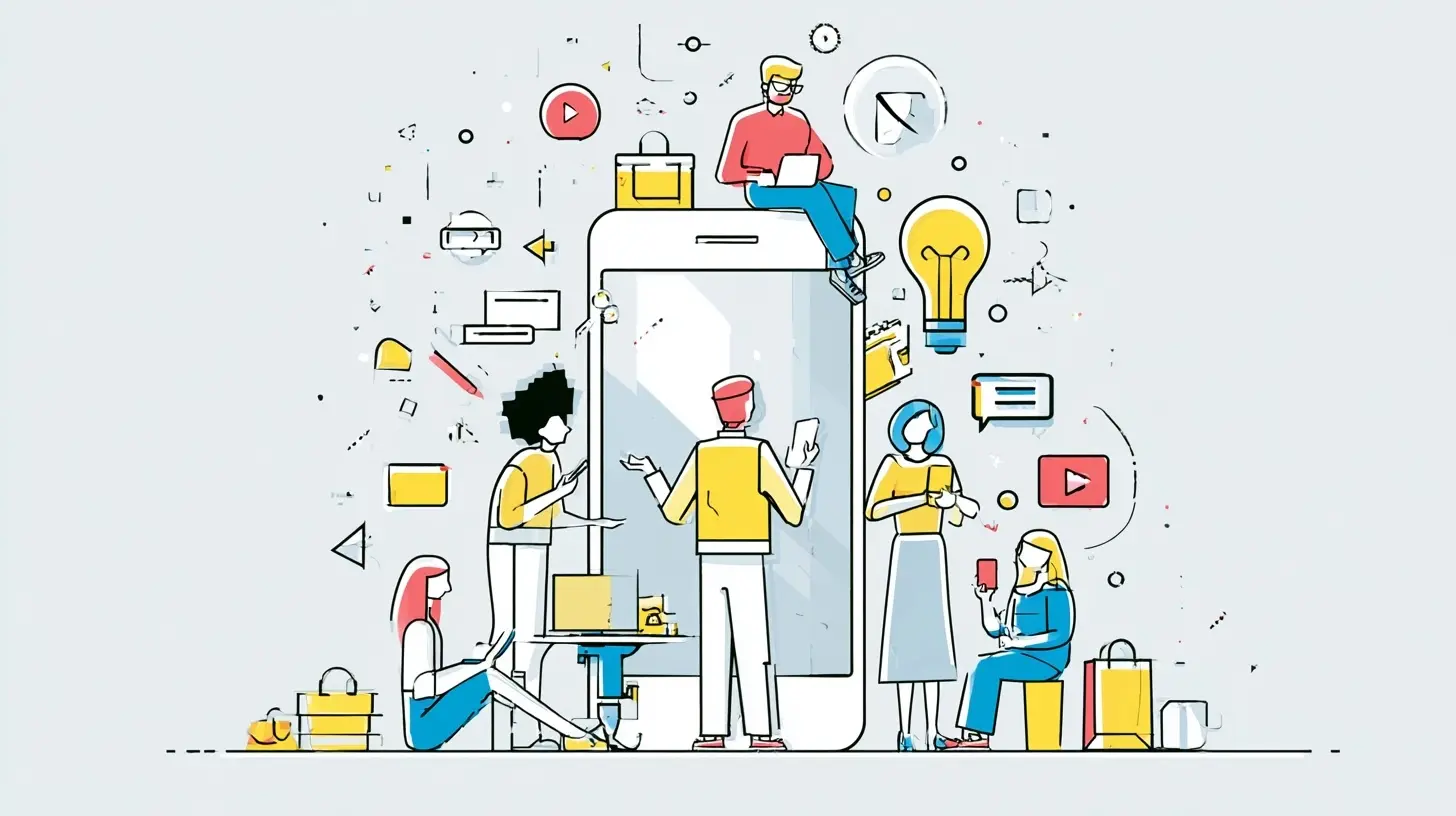
The Productivity Case Against Super Apps
Now the harder part. Super apps have real costs, and they are easy to underestimate.Attention fragmentation inside a single app
Here is the counterintuitive problem. A super app does not reduce distractions. It concentrates them.When your chat, your payments, your news feed, your shopping, and your work tools all live in one app, every notification competes for the same screen. You open the app to check a message and end up scrolling a feed. You go in to pay a bill and get pulled into a group chat. The app becomes a slot machine with many levers.
In a world of separate apps, you can at least close the ones you do not need right now. Inside a super app, everything is always one tap away.
Single point of failure
If everything lives in one app, and that app goes down, you are stuck. If your account gets locked, you lose access to messaging, payments, files, and scheduling at once. If the company changes its terms, you have little leverage.This is not hypothetical. Outages at major platforms have disrupted millions of people's workdays. The more you consolidate, the more you feel those outages.
Vendor lock-in and data portability
Super apps make it easy to get in and hard to get out. Your data is spread across services but controlled by one vendor. Exporting it in a usable form is often awkward or impossible. If you decide to leave, you may lose years of history, context, and relationships.This is a serious consideration for anyone who cares about long-term control over their own information.
Privacy and data concentration
When one company sees your messages, your payments, your location, your calendar, and your shopping, it can build a portrait of your life that no single service could assemble alone. That concentration is valuable to advertisers and risky for users. Even with strong privacy policies, the attack surface is larger, and the incentives to monetize are strong.Feature bloat and shallow execution
Apps that try to do everything often do nothing exceptionally well. The chat feature is worse than a dedicated chat app. The notes feature is worse than a dedicated notes app. The task manager is worse than a dedicated task manager.You end up with a Swiss Army knife when what you needed was a good chef's knife.
When Super Apps Actually Work
The model is not doomed. It works well under specific conditions.- When the services are genuinely related. Messaging and payments go together. Messaging and enterprise resource planning do not.
- When the app is a platform, not a walled garden. Third parties can build on top, which keeps quality high through competition.
- When the user is on mobile most of the day. The consolidation benefit is largest where screen space is smallest.
- When the ecosystem is already dominant. If everyone you know is in the app, coordination benefits outweigh the costs.
- When the company has a strong track record on privacy and reliability. Trust is the currency of consolidation.
If most of those conditions hold, a super app can be a genuine productivity gain. If most do not, you are probably better off with focused tools.
When Super Apps Hurt Productivity
The model tends to backfire when:- You do deep, focused work that requires long uninterrupted blocks. Super apps are optimized for quick interactions, not deep ones.
- You need best-in-class tools for specific tasks. A generalist app will not match a specialist.
- You value portability and control. Lock-in becomes a real cost.
- You are easily pulled into feeds and notifications. Concentration of services means concentration of temptation.
- Your work involves sensitive data. Spreading that data across fewer vendors reduces risk only if the vendor is trustworthy; otherwise it increases it.
Real-World Examples Worth Studying
Grab and Gojek
Both grew from ride hailing into payments, food delivery, and financial services. They work because the services share a real user need: getting around and getting things done in a city. The consolidation makes sense because the user is already in the app to book a ride, and paying for lunch is a natural next step.Microsoft Teams
Teams is a super app in the enterprise sense. It bundles chat, video, files, tasks, and integrations with dozens of other tools. For organizations already in the Microsoft ecosystem, it reduces tool sprawl. For everyone else, it can feel heavy and forced.X (formerly Twitter)
X has signaled ambitions to become an everything app with payments, messaging, and more. Whether it succeeds is unclear. The lesson so far is that declaring yourself a super app does not make you one. The services have to be genuinely useful and trusted.
Common Mistakes and Misconceptions
Mistake 1: Assuming consolidation always means simplicity. It often means more features competing for the same attention.Mistake 2: Treating super apps as a replacement for focused tools. They are usually a complement, not a substitute.
Mistake 3: Ignoring exit costs. Before you move your life into one app, ask how you would get it out.
Mistake 4: Confusing platform and product. A super app that is really just one company's bundle is not the same as an open platform.
Misconception: Super apps are inevitable. They are a strategy, not a law of nature. Many have failed, and many more will.
Misconception: More features mean more value. Value comes from fit, not from volume.
A Practical Framework for Deciding
If you are considering whether to consolidate your tools into a super app, run through these questions.1. Which of my daily tasks genuinely benefit from being in the same place?
2. Which tasks need a specialist tool that a generalist cannot match?
3. How much would it cost me, in time and data, to leave the app later?
4. How does the app handle notifications and attention? Can I turn off what I do not need?
5. What is the company's track record on privacy, security, and outages?
6. Does the app work well on the devices I actually use?
7. Can I export my data in a usable format?
If you can answer those clearly and the trade-offs favor consolidation, a super app can be a real upgrade. If not, a mix of focused tools is likely better.
Best Practices If You Adopt One
- Keep one or two specialist tools for your most important work. Do not force everything into the bundle.- Turn off every notification you do not strictly need. Protect your attention deliberately.
- Set up a regular export of your data, even if you never use it.
- Use separate accounts or profiles for work and personal life if the app allows it.
- Review your setup every few months. Bundles grow, and your needs change.
- Have a fallback plan for outages. Know how you would communicate and pay if the app went down.
The Balanced Verdict
Super apps are neither the future nor a fad. They are a design pattern that works brilliantly in some contexts and poorly in others.The strongest case for them is mobile-first, coordination-heavy life in a dense ecosystem where everyone uses the same platform. The strongest case against them is deep work, data sensitivity, and a desire for long-term control.
For most knowledge workers in Western markets, the realistic future is not one super app but a small set of well-chosen hubs, each covering a domain, connected by a few deliberate bridges. You consolidate where it helps and keep specialists where it matters.
That is less exciting than the "one app to rule them all" narrative. It is also more likely to make you productive without quietly costing you your attention, your data, or your options.
The right question is not whether super apps are the future. It is whether one is the right future for you, and under what conditions you would change your mind.
all images in this post were generated using AI tools
Category:
Productivity AppsAuthor:

John Peterson