Exploring the Legal Landscape for Autonomous Vehicles
16 December 2025
Self-driving cars aren’t sci-fi anymore—they're very real and hitting the roads. From robotaxis in California to autonomous delivery bots in your neighborhood, we’re living in a world where vehicles are starting to think for themselves. But here's the catch: just because technology moves fast doesn't mean our laws can keep up.
So where do we stand legally with autonomous vehicles (AVs)? Who’s responsible in a crash? Can an AI even be held accountable? These are the murky, fascinating questions that lawmakers, tech companies, and consumers are grappling with right now.
Let’s hit the gas and take a deep dive into the legal terrain that’s unfolding beneath the wheels of this fast-moving tech.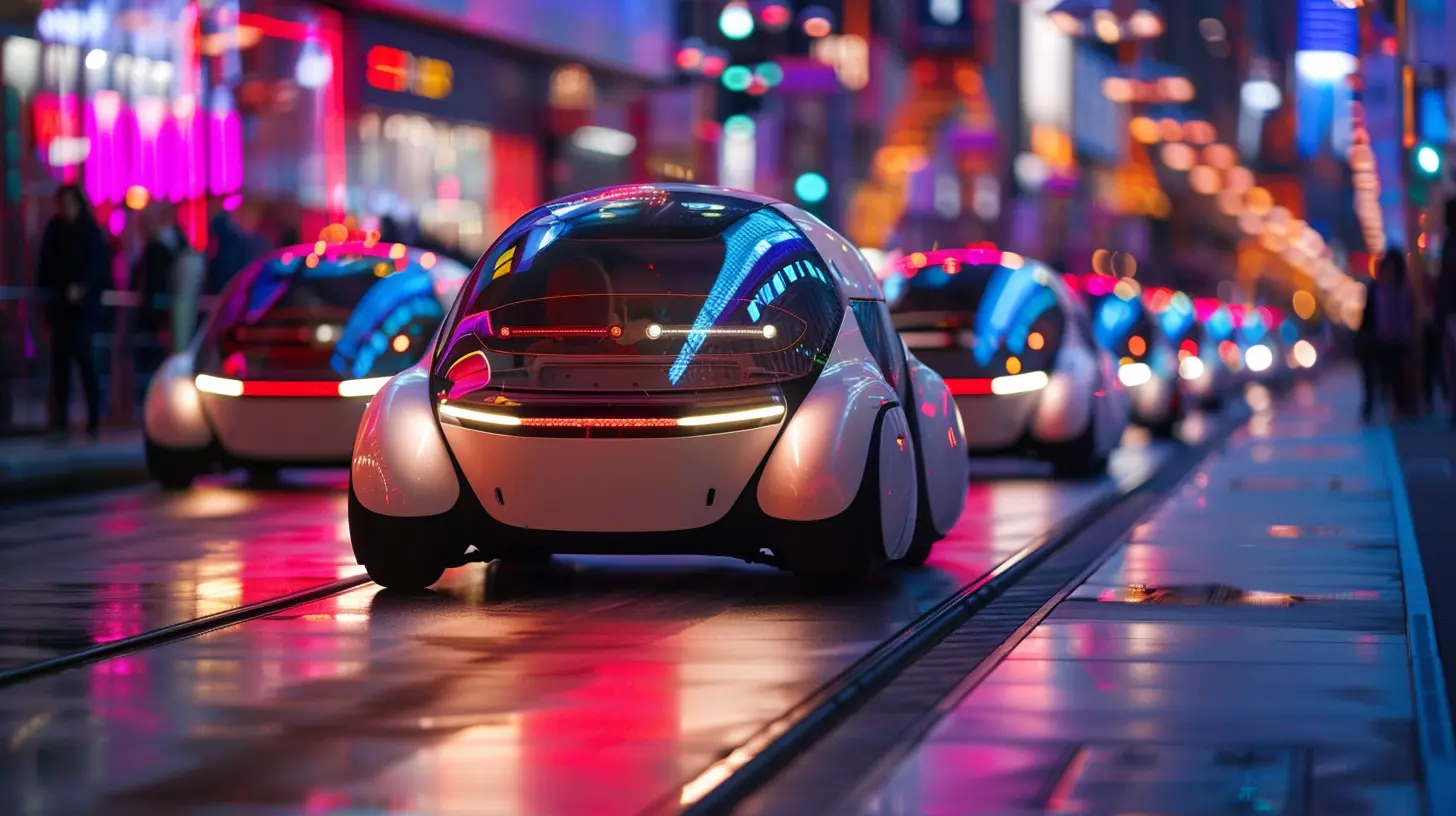
Why Autonomous Vehicles Are Stirring Up Legal Questions
Think about it—laws were written with the idea that a human is behind the wheel. But when a software system is the driver, those laws start to look… well, kind of outdated.While engineers push boundaries with sensors, LiDAR, and AI algorithms, legislators are racing to catch up. They’ve got to rethink everything from traffic laws to insurance models. And it’s not just about safety—it’s about ethics, privacy, and liability too.
What Level Are We Talking About?
Before diving into legal stuff, let’s clarify something—there’s more than one kind of autonomous vehicle.The SAE (Society of Automotive Engineers) breaks down autonomy into six levels:
1. Level 0 – No automation.
2. Level 1 – Driver assistance (think adaptive cruise control).
3. Level 2 – Partial automation (Tesla Autopilot fits here).
4. Level 3 – Conditional automation (the car can drive itself, but may need human help).
5. Level 4 – High automation (no human help needed but only in specific geofenced areas).
6. Level 5 – Full automation everywhere, anytime. Think sci-fi car of the future.
Most legal discussions revolve around Levels 3 to 5—because once a car is making its own decisions, the game changes.
Who’s Legally Responsible in an Autonomous Vehicle Crash?
This is the million-dollar question—literally.In a traditional accident, fault falls on the driver. But what if a self-driving car runs a red light or fails to detect a pedestrian? Do we blame:
- The software developer?
- The auto manufacturer?
- The human passenger who wasn’t driving?
- The company that programmed the AI?
There’s no universal answer yet. In the U.S., liability laws vary state by state. Some states, like Arizona, have broader protections for AV companies testing on public roads. But others, like California, are more conservative.
Insurance companies are in a bit of a pickle too. Traditional policies assume a human is in control. Autonomous vehicles flip that assumption on its head, possibly shifting liability to automakers or tech providers.
Shift Toward Product Liability
Some legal experts argue we’re moving toward a product liability model—in other words, if something goes wrong, the manufacturer is responsible, not the owner. Sounds fair, right? But proving that a software bug caused a crash isn't always straightforward.
The Patchwork of State Laws (and the Fed’s Role)
If you’re wondering whether there’s a national law that governs AVs—well, nope, not yet.Instead, we have a messy patchwork:
- California: Requires permits for testing and mandates detailed crash reporting.
- Arizona: Offers a more laissez-faire approach to attract AV businesses.
- Florida: Allows fully autonomous vehicles to operate without a human driver.
- Nevada: Was the first state to allow AVs on public roads with special plates.
At the federal level, the National Highway Traffic Safety Administration (NHTSA) has released guidelines but hasn’t enforced hard rules—yet. Their hands-off approach gives states flexibility but also leads to confusion and inconsistency.
It’s like giving everyone in class different textbooks and then expecting them to pass the same final exam.
Privacy and Data Collection: Who’s Watching the Watchers?
Self-driving cars are data-hungry beasts. They collect massive amounts of info—your location, driving behavior, routes, even facial recognition in some cabs. So naturally, privacy becomes a hot-button issue.Right now, there’s no AV-specific federal privacy law in the U.S. (cue the sound of cybersecurity professionals sighing). Instead, AVs are subject to general consumer data laws like the California Consumer Privacy Act (CCPA).
But come on—shouldn’t a car that’s basically a rolling computer deserve its own set of rules?
There’s also concern over who owns the data—drivers, carmakers, or third-party software vendors? And what happens if that data gets leaked? These questions need answers fast as AVs become more widespread.
Ethical Dilemmas on the Digital Road
Let’s play devil’s advocate for a sec.Imagine this: A self-driving car must choose between swerving into a tree (potentially injuring its passenger) or hitting a pedestrian. What should it do? More importantly, who decides?
This is the world of AI ethics, where programming decisions can literally mean life or death.
Some argue humans shouldn’t delegate such decisions to machines at all. Others counter that algorithms can make better, less emotional calls than fallible human drivers. There’s no clear winner in this debate, but it’s pushing lawmakers to set clearer standards.
Autonomous Trucking and Commercial Vehicles
While most media attention focuses on robotaxis and personal AVs, companies are betting big on autonomous trucks. Think 18-wheelers that drive cross-country without a single nap or gas station break.Legally, this opens a whole new can of worms:
- Can autonomous trucks operate without a co-driver or safety operator?
- Should AV trucks follow the same Hours-of-Service regulations as human drivers?
- What about labor unions and potential job losses?
States like Texas and New Mexico are already welcoming autonomous freight companies for testing. But the federal government hasn’t yet created a specific framework for commercial AV transport.
That silence won’t last forever—especially as the trucking industry stares down a significant driver shortage and rising delivery demands.
International Legal Approaches: Who’s Leading the Pack?
The U.S. isn’t the only player in the AV law game. Other countries are putting their own spin on the rulebook:- Germany has passed laws that recognize Level 4 AVs, but with strict monitoring.
- Japan allows limited AV use during specific trials, especially for elderly transport services.
- China is moving aggressively, with government-backed initiatives and large-scale urban pilots.
- UK aims to have self-driving vehicles on the roads by 2025 with specific safety and liability laws baked in.
One notable effort is the UNECE’s (United Nations Economic Commission for Europe) regulatory framework, which tries to offer global AV standards. It’s a good start, but like anything international… it moves slowly.
Cybersecurity: The Forgotten Legal Minefield
Let’s not forget—if it’s connected, it can be hacked. And that applies to AVs too.Imagine a hacker taking control of a fleet of autonomous ride-shares in a major city. Yeah, not great.
Right now, cybersecurity regulations for AVs are minimal, though the NHTSA has issued some voluntary guidelines. In Europe, cybersecurity compliance is already a requirement under UNECE regulations.
A big issue here is defining responsibility. If a self-driving car gets hacked and causes a crash—who pays? The carmaker? The software vendor? The driver?
Until stronger cybersecurity laws are in place, this legal blind spot could become a gaping risk.
The Road Ahead: What Needs to Happen?
So what’s the solution to this legal spaghetti?Here’s a cheat sheet of what needs fixing:
1. Unified Federal Laws – The U.S. needs nationwide policies that override inconsistent state laws.
2. Clear Liability Frameworks – A mix of product liability and user accountability, depending on use cases.
3. Dedicated Privacy & Data Laws – Specific rules for AV data that address ownership, consent, and usage.
4. Cybersecurity Standards – Mandatory protocols to prevent remote hijacking and breaches.
5. Ethical AI Guidelines – Clear programming boundaries for life-and-death decisions.
6. Public Education & Transparency – Let’s face it, people are still wary of AVs. Openness builds trust.
So, Should We Hit the Brakes or the Gas?
Honestly? Probably a bit of both.Autonomous vehicles promise huge benefits—fewer accidents, more accessibility, and new ways to transport goods and people. But without solid legal footing, they’re running on thin ice.
We’re in the messy middle right now. Tech is outpacing regulation. But that’s not a reason to hit the panic button. It’s a call to get smart, update our laws, and craft a future where innovation and accountability ride side by side.
Because the road ahead for autonomous vehicles isn’t just paved with sensors and code—it’s built on trust, safety, and law.
all images in this post were generated using AI tools
Category:
Autonomous VehiclesAuthor:

John Peterson
Discussion
rate this article
2 comments
Avianna Weber
This article effectively highlights the complexities of legal frameworks surrounding autonomous vehicles. As technology evolves, it’s crucial for lawmakers to keep pace, ensuring safety and accountability while fostering innovation in this groundbreaking field.
December 25, 2025 at 11:34 AM
John Peterson
Thank you for your insightful comment! I completely agree that balancing safety, accountability, and innovation is key as we navigate the evolving legal landscape for autonomous vehicles.
Starla McQuillen
Important insights on evolving AV regulations ahead!
December 18, 2025 at 5:26 AM
John Peterson
Thank you! I'm glad you found the insights valuable. The evolving regulations will play a crucial role in shaping the future of autonomous vehicles.