The Role of Open Source in the Race to Quantum Computing
1 August 2026
The race to build a practical quantum computer is often described in terms of qubits, error correction, and cryogenic temperatures. But beneath the physics lies a quieter, equally critical battle: the battle for software. And in that battle, open source has already won the strategic high ground.
It is tempting to think of quantum computing as a hardware problem. After all, the machines themselves are marvels of engineering, with superconducting circuits cooled to temperatures colder than deep space, or trapped ions suspended in electromagnetic fields. But a quantum computer without software is just an extremely expensive refrigerator with a party trick. The software stack, from the low-level pulse sequences that control the hardware to the high-level quantum algorithms that solve problems, is where the real intellectual property and competitive advantage now live.
Open source is not just a nice-to-have in this ecosystem. It is the scaffolding upon which the entire industry is being built. Understanding why, and how, is essential for anyone trying to make sense of where this technology is heading, or worse, trying to bet on a winner.
Why Quantum Computing Needs Open Source More Than Classical Computing Did
The history of classical computing offers a useful contrast. In the 1980s and 1990s, the software stack was largely proprietary. Microsoft, Apple, and a host of specialized vendors controlled the operating systems, compilers, and development tools. Open source existed, but it was a counterculture movement, not the default. Linux was a hobbyist project that took decades to become the backbone of the internet.Quantum computing is different, and not by accident. The hardware is evolving so rapidly that no single company can keep its software current. A chip that has 50 qubits today might have 500 in three years, and the error rates, connectivity, and noise profiles will all change. A proprietary software stack, tuned for a specific generation of hardware, becomes obsolete the moment the hardware is upgraded. Open source, by contrast, allows a community of researchers and engineers to continuously adapt the software to whatever hardware exists right now.
There is also a pedagogical reason. We are still in the era of quantum literacy, not quantum fluency. Most developers, even very good ones, do not understand quantum mechanics deeply enough to write efficient algorithms. The only way to build a workforce is through education, and the only way to scale education is through open, accessible tools. A student in Nairobi or São Paulo cannot access IBM's private research stack, but they can access Qiskit, Cirq, or QSharp, all of which are open source. That is not a charitable decision; it is a strategic one. The company or community that trains the next generation of quantum programmers will own the future talent pool.

The Major Open Source Frameworks and What They Actually Do
To understand the landscape, you need to know the main players. These are not just code libraries; they are entire ecosystems with distinct philosophies, strengths, and weaknesses.Qiskit: The IBM-Backed Heavyweight
Qiskit is the most widely used open source quantum computing framework, and it is backed by IBM. It operates at multiple levels of abstraction. You can write a high-level circuit using simple gates, or you can drop down to the pulse level and control the actual microwave signals that manipulate the qubits. This dual-level access is its greatest strength. It allows researchers to experiment with error mitigation and calibration techniques that would be impossible in a purely abstract framework.The trade-off is complexity. Qiskit has a steep learning curve, and its API has changed significantly over the years, sometimes breaking old code. For a beginner, it can be overwhelming. But for a serious researcher, it is the most powerful tool available. The documentation is excellent, and the community is vast, which means that almost any problem you encounter has been asked and answered on a forum somewhere.
Cirq: Google's Precision Instrument
Cirq is Google's open source framework, and it reflects Google's hardware philosophy. Google's quantum processors, like the Sycamore chip, have a specific topology, meaning that qubits are only connected to their nearest neighbors. Cirq is designed to work natively with that constraint. It gives you fine-grained control over the timing of gates and the scheduling of operations. This is incredibly useful for optimizing circuits for specific hardware, but it makes Cirq less portable. Code written for Cirq often needs significant modification to run on IBM's hardware or on IonQ's trapped-ion machines.Cirq is not a beginner's tool. It assumes you understand the underlying physics and the specific architecture you are targeting. If you are working on hardware-aware algorithm optimization, Cirq is superb. If you just want to simulate a simple algorithm, you will find it frustratingly low-level.
PennyLane and the Hybrid Quantum-Classical World
PennyLane takes a different approach. It is not tied to a specific hardware vendor. Instead, it integrates quantum computing with classical machine learning frameworks like PyTorch and TensorFlow. This is a crucial insight: the first useful quantum applications will not be pure quantum algorithms. They will be hybrid algorithms, where a classical neural network and a quantum circuit work together, passing data back and forth. PennyLane allows you to build these hybrid models and, critically, to compute gradients through the quantum circuit, which is essential for training the model.PennyLane is the framework to watch for anyone interested in quantum machine learning. It is more abstract than Cirq and less comprehensive than Qiskit, but it fills a niche that neither of the big vendors has fully addressed. Its main weakness is that it relies on simulators for many operations, and simulators are slow. When you run on real hardware, you are at the mercy of the noise and error rates, and PennyLane's abstraction layer can make it harder to diagnose hardware-specific issues.
ProjectQ and the Academic Alternatives
ProjectQ, developed at ETH Zurich, is another open source framework, though it has a smaller community. Its strength is its compiler, which can optimize circuits very aggressively. For researchers who are not tied to a specific vendor, ProjectQ offers a cleaner, more portable abstraction than Qiskit or Cirq. The downside is that the ecosystem is smaller. Fewer tutorials, fewer examples, fewer people to ask for help.There is also Q
from Microsoft, which is open source but deeply integrated with the .NET ecosystem. Q# is a domain-specific language, which means it is designed specifically for quantum computing, not as a general-purpose language with quantum libraries. This makes it expressive but also limits its use outside of Microsoft's ecosystem.

The Hidden Layer: Compilers, Simulators, and Error Correction
Most discussions of quantum software focus on the high-level frameworks, but the real action is in the layers below. A quantum compiler is not like a classical compiler. It has to take a high-level circuit and map it onto a specific hardware topology, inserting SWAP gates to move qubits around, optimizing the timing to minimize decoherence, and applying error mitigation techniques. This is an extraordinarily difficult optimization problem, and it is being solved in open source.The most important open source project in this space is Qiskit Terra, which includes a transpiler that performs these optimizations. But there are also standalone projects like OpenQASM, which is a low-level assembly language for quantum circuits. OpenQASM is not a framework; it is a specification, and it is essential for interoperability. If you want to write a circuit that can run on any hardware, you write it in OpenQASM and then use a vendor-specific compiler to translate it.
Simulators are another critical piece. Quantum simulators run on classical computers and allow you to test circuits without using expensive hardware. The best ones, like Qiskit Aer, use advanced techniques to compress the state space and parallelize the computation. But they all hit a wall at around 40 or 50 qubits, because the state space grows exponentially. There is no way around this; it is a fundamental limitation of classical computing. So simulators are useful for testing and debugging, but they are not a substitute for real hardware.
Error correction is the final piece of the puzzle, and it is where open source is most desperately needed. Quantum error correction codes are incredibly complex, and they require massive overhead. A single logical qubit might require dozens, or even hundreds, of physical qubits. The software to manage this overhead, to encode and decode the error correction codes, and to continuously monitor and correct errors in real time, is still in its infancy. Most of it is being developed in academic labs and released as open source, because no single company can afford to develop all of it in isolation.
The Open Source Business Model Problem
Here is the uncomfortable truth: open source is not a business model. It is a distribution strategy. Someone still has to pay for the developers who write the code, the engineers who maintain the repositories, and the researchers who design the algorithms. In the quantum world, the money is coming from a few sources, and each has its own agenda.IBM and Google fund their open source frameworks because they sell hardware. Qiskit is a loss leader; it exists to make IBM's quantum computers easier to use, and therefore more likely to be rented by the hour through their cloud services. The more people who use Qiskit, the more demand there is for IBM's hardware. The same logic applies to Cirq and Google's processors.
There are also independent companies, like Zapata Computing and Cambridge Quantum, that build proprietary software on top of open source foundations. They are betting that the value is in the algorithms and the workflow, not in the basic framework. This is a risky bet, but it is the same bet that Red Hat made with Linux, and it worked out well for them.
The danger is that open source becomes a dumping ground for the boring, difficult work, while the interesting and profitable work is locked away in proprietary services. This is already happening to some extent. The basic circuit library is open source, but the advanced error mitigation techniques, the good calibration tools, and the efficient noise models are often proprietary. If this trend continues, the open source ecosystem will become a ghost town, with all the real innovation happening behind closed doors.
Common Misconceptions and Mistakes
There are several misconceptions about open source and quantum computing that need to be cleared up.The first is that open source means free. It does not. Open source means that the source code is visible and modifiable, but it does not mean that the cloud resources, the hardware time, or the support services are free. Running a quantum circuit on IBM's hardware costs money, even if the software is free. The mistake is to assume that open source is the same as no-cost, and then to be surprised when you get a bill.
The second misconception is that open source is more secure because it is transparent. This is not automatically true. Transparency means that vulnerabilities are visible, but it also means that attackers can study the code to find weaknesses. The security of open source depends on the quality of the review process and the size of the community. A small, poorly maintained open source project can be far less secure than a well-audited proprietary system.
The third mistake is to treat open source as a single entity. There is no such thing as "the open source quantum community." There are multiple, often competing, communities with different goals and different standards. A project like Qiskit is not the same as a project like ProjectQ, and they do not always interoperate well. Choosing one is a commitment, and switching is costly.
Practical Advice for Developers and Researchers
If you are entering the quantum computing field, the first piece of advice is to stop reading about it and start doing it. Pick one framework, install it, and run a simple circuit. The barrier to entry is lower than you think. You do not need a quantum computer; you can run a simulator on your laptop.Which framework should you pick? It depends on your goal. If you are an academic researcher interested in hardware-aware algorithms, Cirq is a good choice, especially if you are collaborating with Google. If you are an industry developer who wants to build practical applications, Qiskit is the safer bet, simply because of its larger community and better documentation. If you are interested in quantum machine learning, start with PennyLane.
Do not try to learn all of them at once. The syntax is different, the abstractions are different, and the mental models are different. Focus on one until you are comfortable, and then branch out. The concepts transfer, even if the code does not.
A second piece of advice is to learn the underlying physics, even if it is painful. You cannot use Qiskit effectively if you do not understand what a Hadamard gate does or why decoherence is a problem. The frameworks abstract away a lot of the complexity, but they do not abstract away all of it. When something goes wrong, and it will, you will need to understand whether the problem is in your algorithm, in the transpilation, or in the hardware itself. That requires a basic understanding of quantum mechanics.
A third piece of advice is to contribute, even in a small way. Open source thrives on contributions, and the quantum community is small enough that even a modest contribution can have a significant impact. Fix a typo in the documentation. Write a tutorial. Submit a bug report. This is not just altruism; it is a way to build a reputation and to get noticed by the companies and research groups that are hiring.
The Future: What Open Source Will Look Like in Five Years
Predicting the future of quantum computing is a fool's errand, but there are some trends that are already visible.The first is consolidation. There are too many frameworks, and they are not interoperable. The industry will likely converge on a smaller set of standards, probably around the hardware vendors. Qiskit is well positioned to be the default, but it is not guaranteed. If Google's hardware becomes dominant, Cirq could take over. The key factor will be which hardware achieves the best error rates and the highest qubit counts, because the software will follow the hardware.
The second trend is the emergence of quantum services that hide the quantum entirely. Just as most developers today do not think about the physical servers running their code, most future quantum developers will not think about qubits. They will call an API that returns a result, and the quantum computation will happen in the background. Open source will be the foundation for these services, but the services themselves will be proprietary. This is already happening with quantum cloud offerings from IBM, Amazon, and Microsoft.
The third trend is the growing importance of open data. Quantum hardware is noisy, and the noise profiles change over time. To develop good error mitigation techniques, you need access to real hardware data. The vendors are starting to release this data, but they are not releasing all of it. The community needs open datasets of noise measurements, calibration results, and error rates. Without this data, the open source ecosystem will be severely handicapped.
The Role of the Community
The open source quantum community is unusual in that it is a mixture of academic researchers, industry engineers, and hobbyists. This diversity is a strength, but it can also lead to tension. Academics want to publish papers; engineers want to ship products; hobbyists want to learn. The frameworks that succeed will be the ones that serve all three groups without alienating any of them.There is also a geographic dimension. The quantum computing race is often framed as a competition between the United States and China, with Europe playing a supporting role. Open source complicates this narrative. A developer in Brazil can contribute to Qiskit, and a researcher in India can improve the error correction code in Cirq. The software is global, even if the hardware is concentrated in a few countries. This is a good thing. It means that the benefits of quantum computing, if and when they arrive, will be more evenly distributed than the benefits of classical computing were.
That is the real promise of open source in the quantum race. It is not just about code. It is about access. It is about giving the brightest minds everywhere the tools they need to contribute, regardless of their affiliation or their budget. The race to quantum computing will be won not by the company with the best chip, but by the ecosystem with the best software, and that ecosystem is being built in the open, one commit at a time.
The next time you hear about a breakthrough in quantum computing, ask yourself what software made it possible. The answer will almost certainly be open source.
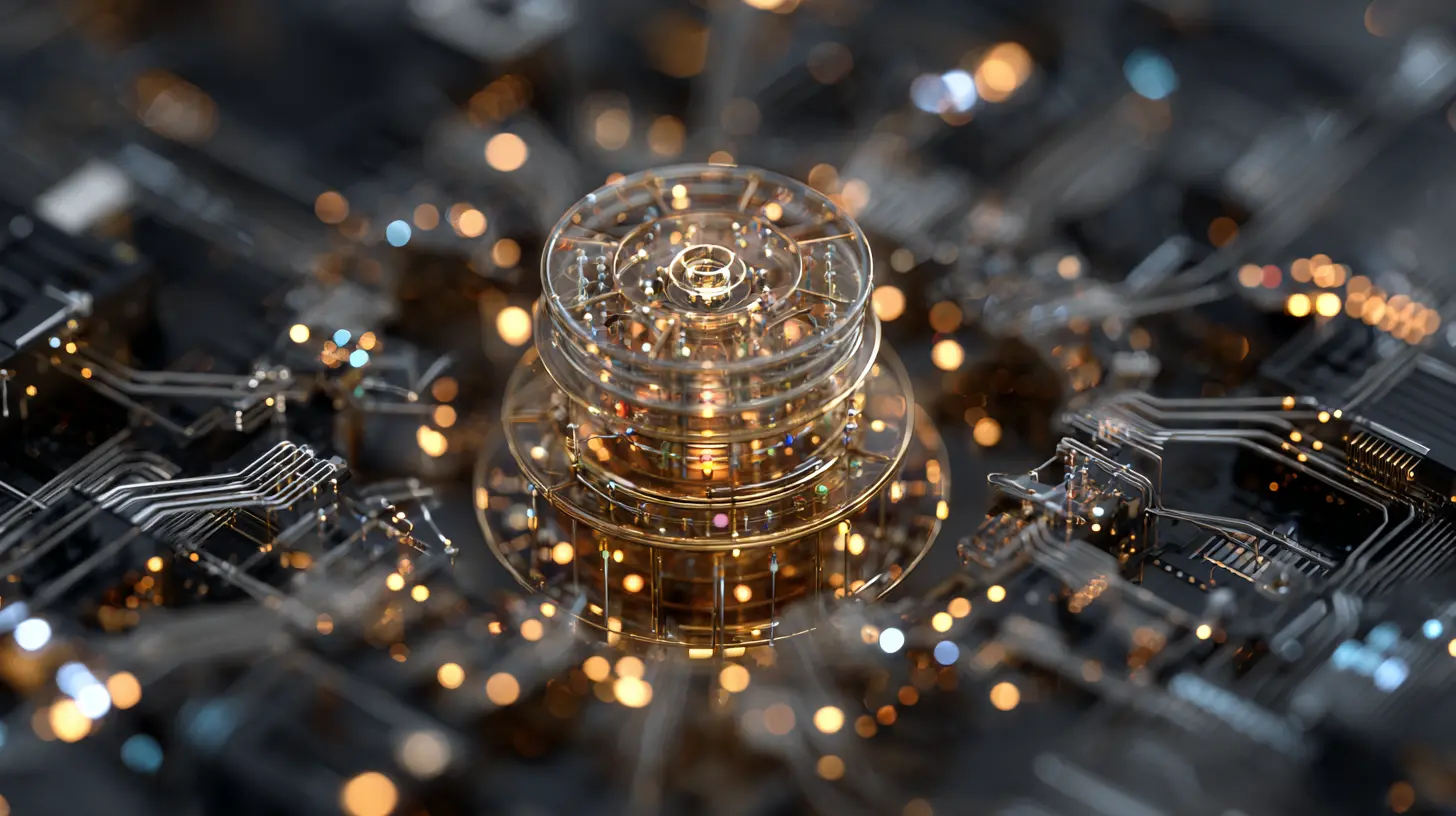
all images in this post were generated using AI tools
Category:
Open Source ProjectsAuthor:

John Peterson
Discussion
rate this article
1 comments
Liv McLain
Open source is crucial in quantum computing, fostering collaboration and rapid innovation. Sharing knowledge and tools accelerates breakthroughs that could unlock immense potential in various industries.
August 1, 2026 at 2:38 AM
John Peterson
I completely agree. Open source not only drives collaboration but also democratizes access to vital resources, which is key for advancing quantum technologies across different fields.