Why Wi-Fi 7 Could Be a Game-Changer for Home Networks
13 December 2025
If you're like most of us, you probably have a love-hate relationship with your home Wi-Fi. One minute you're binging your favorite show in glorious 4K, and the next, you’re staring at a buffering icon that feels like it’s mocking you. Sound familiar?
Well, there’s good news on the horizon. Wi-Fi 7 is coming—and it’s not just another incremental upgrade. This next-generation wireless technology could quite literally rewrite the rules of what’s possible at home. Faster speeds? Check. Lower latency? Check. Better handling of multiple devices? Double check.
In this post, we’re diving deep into why Wi-Fi 7 could be a game-changer for home networks. Whether you're a casual browser, a hardcore gamer, or a smart home enthusiast, this is one tech wave you’ll want to ride.
🌀 What Exactly Is Wi-Fi 7?
Let’s start with the basics. Wi-Fi 7, also known by its technical name 802.11be, is the upcoming wireless networking standard that builds upon the foundation laid by Wi-Fi 6 and 6E.But here's the kicker—it’s not just faster. Wi-Fi 7 is smarter, more efficient, and tailor-made for the ever-growing jungle of connected devices that live under your roof.
While it's still being finalized (expected to hit mainstream devices around 2024–2025), early previews suggest it could transform the way we use the internet at home.
Think of it this way: If Wi-Fi 6 was upgrading from a sedan to a sports car, Wi-Fi 7 is like trading that in for a rocket ship. 🚀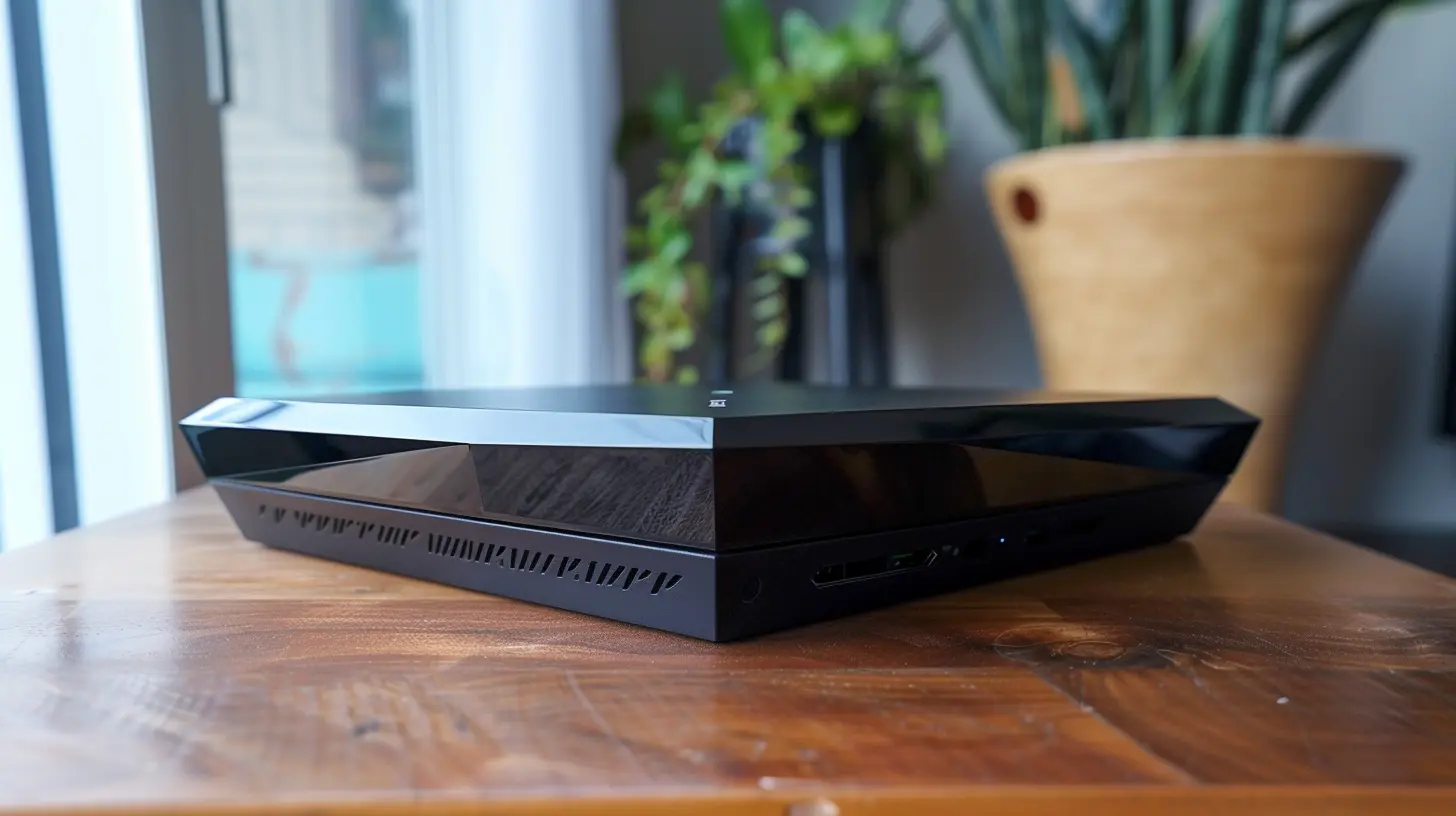
🚀 Speed Like You’ve Never Seen Before
Let’s talk numbers for a second.Wi-Fi 6 maxed out at around 9.6 Gbps. That’s already pretty fast, right? Well, Wi-Fi 7 is gunning for a potential top speed of 46 Gbps. Yes, you read that right—forty-six gigabits per second.
Now, does that mean your internet connection will instantly become 5 times faster? Not quite (unless you’re rocking a truly monstrous internet package). But inside your home, device-to-device transfers, streaming from your NAS, or even just downloading a huge game update will become mind-blowingly quick.
Imagine downloading a 50GB game in under 10 seconds. That’s the kind of leap we’re talking about.
🕹️ Seamless Gaming and Streaming — Say Goodbye to Lag
Gamers and streamers, rejoice! Wi-Fi 7 brings ultra-low latency, which is basically a fancy way of saying “no more annoying delay.”Latency is the time it takes for data to travel from your device to the router and back. For online gaming, video conferencing, or even cloud-based services like Xbox Cloud Gaming or Google Stadia, low latency is critical.
Wi-Fi 7 introduces a feature called Multi-Link Operation (MLO). It allows devices to send and receive data across multiple bands at the same time. That means faster, more stable connections, even in the busiest households.
So whether you’re headshotting enemies in Call of Duty or attending a Zoom meeting full of pixelated faces, everything just works smoother.
🧠 Smarter Band Management with Multi-Link Operation
You know how your current Wi-Fi sometimes forces you to pick between 2.4 GHz and 5 GHz networks? And then you guess wrong and end up connected to the slower one?Wi-Fi 7 tosses that whole mess out the window.
Thanks to Multi-Link Operation, it can simultaneously use multiple bands (2.4, 5, and even 6 GHz) for communication. It’s like having three separate highways instead of just one crowded street.
This is huge for home networks because it allows for dynamic, intelligent routing of traffic. Instead of devices fighting for bandwidth, they cooperate and share the lanes.
So whether your smart fridge, your laptop, and your teenager’s gaming rig are all online, Wi-Fi 7 makes sure nobody gets left in digital traffic.
🏠 Perfect for Smart Homes (Because Everything’s Connected Now)
Let’s face it—our homes are getting smarter by the minute.From voice assistants to doorbell cameras, robot vacuums, smart thermostats, and light bulbs that change color with a voice command, we’re filling up our homes with connected devices.
But here’s the problem: Most Wi-Fi networks weren’t designed to handle this level of device density.
Wi-Fi 7 shines here. It brings better network efficiency, meaning it can support dozens (even hundreds) of devices without breaking a sweat.
So you can keep automating, streaming, monitoring, and opening garage doors via smartphone—without worrying about your Wi-Fi collapsing under the pressure.
📡 Wider Channels = More Bandwidth
Wi-Fi 6 introduced 160 MHz channels, and we were all pretty excited about that. But Wi-Fi 7 takes it up a notch… actually two notches.With support for 320 MHz channels, Wi-Fi 7 can handle way more bandwidth. Think of this like upgrading from a single-lane road to a six-lane expressway. More data can travel at once, with less congestion.
This matters a lot when multiple family members are downloading, uploading, streaming, and video-chatting at the same time.
So, whether it’s a Netflix marathon in 8K or a live virtual reality concert, your home network won’t blink.
👨👩👧👦 Built for the Whole Family (Even the Bandwidth Hogs)
We’ve all got that one person in the house who hogs the Wi-Fi, right? They’re gaming online, streaming high-res videos, and uploading to YouTube—all at once.Wi-Fi 7 is built to handle it.
With tech like OFDMA (Orthogonal Frequency Division Multiple Access) and MU-MIMO (Multi-User, Multiple Input, Multiple Output), router signals are divided and directed efficiently, like tiny data ninja squads.
This means more efficient communication between the router and many devices at once. No more slowing down when someone starts a Zoom call or kicks off a massive game update.
In short, Wi-Fi 7 is perfect for connected families who multitask and media-stream like pros.
🔒 Better Security, Because Privacy Matters
Wi-Fi 7 is expected to integrate the latest in wireless security standards, including WPA3 or even newer protocols down the line.So whether it's your personal photos, payment info, or your kids' school accounts, you’ll have stronger, more robust security keeping hackers at bay.
And since Wi-Fi 7 can better manage IoT devices, you have tighter control over what’s allowed to connect to your home network.
⚙️ Future-Proofing Your Home Network
Buying a Wi-Fi 7 router may feel like overkill today, but it’s really about setting yourself up for the next 5–10 years.Tech evolves fast. Devices are getting smarter, content is moving to higher resolutions (hello, 8K), and remote work is becoming the norm. Not to mention the rise of augmented reality (AR) and virtual reality (VR) platforms.
Wi-Fi 7 is essentially building the digital highway for all this to run smoothly.
So while you might not see the full power of Wi-Fi 7 on day one, as your devices catch up—they’ll thank you for the head start.
🧐 Should You Upgrade Right Away?
Great question.If your current setup is running fine, you don't need to toss it out just yet. Routers and devices supporting Wi-Fi 7 will likely hit the market gradually, and prices will drop over time.
But if you're planning a major upgrade—or you’re already the proud owner of several gigabit-hungry devices—it might be worth considering a Wi-Fi 7 compatible router when they become more available.
Especially if you’re building a future-proof smart home.
🌐 Wrapping It Up: The Future Is Wireless (and Blazing Fast)
Wi-Fi 7 isn’t just a fancy tech spec—it’s a whole new era for home networks. With its lightning-fast speeds, ultra-low latency, and ability to juggle tons of connected devices, it’s poised to revolutionize how we live, work, and play at home.So whether you’re a tech geek, a busy parent, a remote worker, or just someone who wants smooth Netflix nights, Wi-Fi 7 is the upgrade you didn’t know you needed… but soon won’t be able to live without.
Just imagine: No more dead zones. No more lag. Just pure, seamless connectivity.
And really, isn’t that what we’re all after?
all images in this post were generated using AI tools
Category:
NetworkingAuthor:

John Peterson
Discussion
rate this article
2 comments
Judith Banks
Wi-Fi 7 promises significantly faster speeds and improved reliability, making it a crucial upgrade for enhancing home network performance and connectivity.
January 20, 2026 at 5:29 AM
John Peterson
Absolutely! Wi-Fi 7's advanced features can greatly boost home network performance, providing faster speeds and better reliability for connected devices.
Phaedron McNaughton
Wi-Fi 7: Because who wouldn’t want faster internet for cat videos?
December 14, 2025 at 4:42 AM
John Peterson
Absolutely! Wi-Fi 7 promises not just faster speeds, but also improved connectivity for all devices, ensuring a seamless experience for everything from cat videos to smart home applications.