Then and now: How MIT Lincoln Laboratory has served as a driving force in national security innovation
August 6, 2026 - 04:40

As MIT Lincoln Laboratory marks its 75th anniversary, the people who have built and sustained its mission are taking a long look back at the inventions and breakthroughs that have quietly reshaped the United States and the wider world. What started as a wartime response to the threat of air attack has grown into a permanent engine of innovation, one whose fingerprints appear across radar, air traffic control, satellite communications, and cybersecurity.
The lab was born in 1951 out of a pressing need to defend against Soviet bombers. Its first major achievement was the Semi-Automatic Ground Environment, or SAGE, a computer network that linked radar sites across the continent and allowed for real-time tracking of aircraft. That system did more than protect the skies. It laid the groundwork for modern digital computing and data networking, ideas that would later ripple into civilian life.
Over the decades, the lab has kept that same spirit of urgency. Its researchers developed the first solid-state radar, which made systems smaller and more reliable. They pioneered the use of phased array antennas, now standard in weather monitoring and defense. In the 1990s, they turned to space, building sensors that track objects in orbit and helping to prevent collisions between satellites. More recently, the lab has focused on cyber defense, developing tools to detect and disrupt attacks on critical infrastructure.
What stands out to many who have worked there is not just the technology itself but the pace. The lab has always operated on a model of rapid prototyping, taking an idea from a whiteboard to a working field test in months, not years. That approach has drawn top engineers and scientists who want to see their work make a difference quickly.
The anniversary is a moment to remember that national security innovation is not a single event. It is a continuous process of asking hard questions, testing assumptions, and building something better. For three quarters of a century, Lincoln Laboratory has done exactly that, and its next chapter is already being written.
MORE NEWS

August 5, 2026 - 02:35
Samsung Electronics launches next-generation AI memory technologySamsung Electronics has announced the launch of its next-generation artificial intelligence memory technology, a strategic move aimed at solidifying its leadership in the rapidly expanding AI...
August 4, 2026 - 11:43
New Generation Of Intelligent Drones Defined By Technology ConvergenceThe rapid evolution of unmanned aerial systems is no longer about a single breakthrough. Instead, the current leap forward in intelligent drones is being driven by a powerful convergence of several...
August 3, 2026 - 23:03
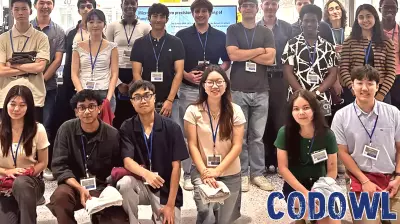
A New Path Into the Chip Industry for Northeast StudentsThe 2026 Northeast Microelectronics Internship Program wrapped up its latest cycle, giving students a direct route into the world of semiconductors and advanced manufacturing. Rather than just...

August 3, 2026 - 02:50
IonQ Completes Acquisition Of SkyWater Technology To Create Vertically Integrated Quantum PlatformIonQ has officially closed its acquisition of SkyWater Technology, a move that consolidates semiconductor design, chip fabrication, advanced packaging, and quantum systems engineering under a...