Can SaaS Replace Traditional Enterprise Software by 2027?
20 April 2026
Let’s be honest for a second. If you’ve ever worked in a corporate office, you’ve likely felt the weight of traditional enterprise software. It’s that colossal, monolithic system that takes an age to load, requires a small army of IT specialists to maintain, and feels about as intuitive as operating a submarine with a manual written in a forgotten language. You know the one—it probably has a name that sounds like a law firm, and its last major update was around the time flip phones were cool.
Now, look over your shoulder. On your browser tabs, there’s Slack, Google Workspace, Salesforce, or maybe a project management tool like Asana. These are the nimble, cloud-born applications you actually like using. They’re Software-as-a-Service (SaaS), and they’ve been quietly, and then not so quietly, moving from the periphery of our work lives to its very center.
This brings us to a monumental question hanging over every CIO’s head: Can SaaS replace traditional enterprise software by 2027? Is the era of the on-premise software behemoth coming to a close, or are we witnessing a more complex evolution? Buckle up, because we’re diving deep into the heart of this digital transformation.
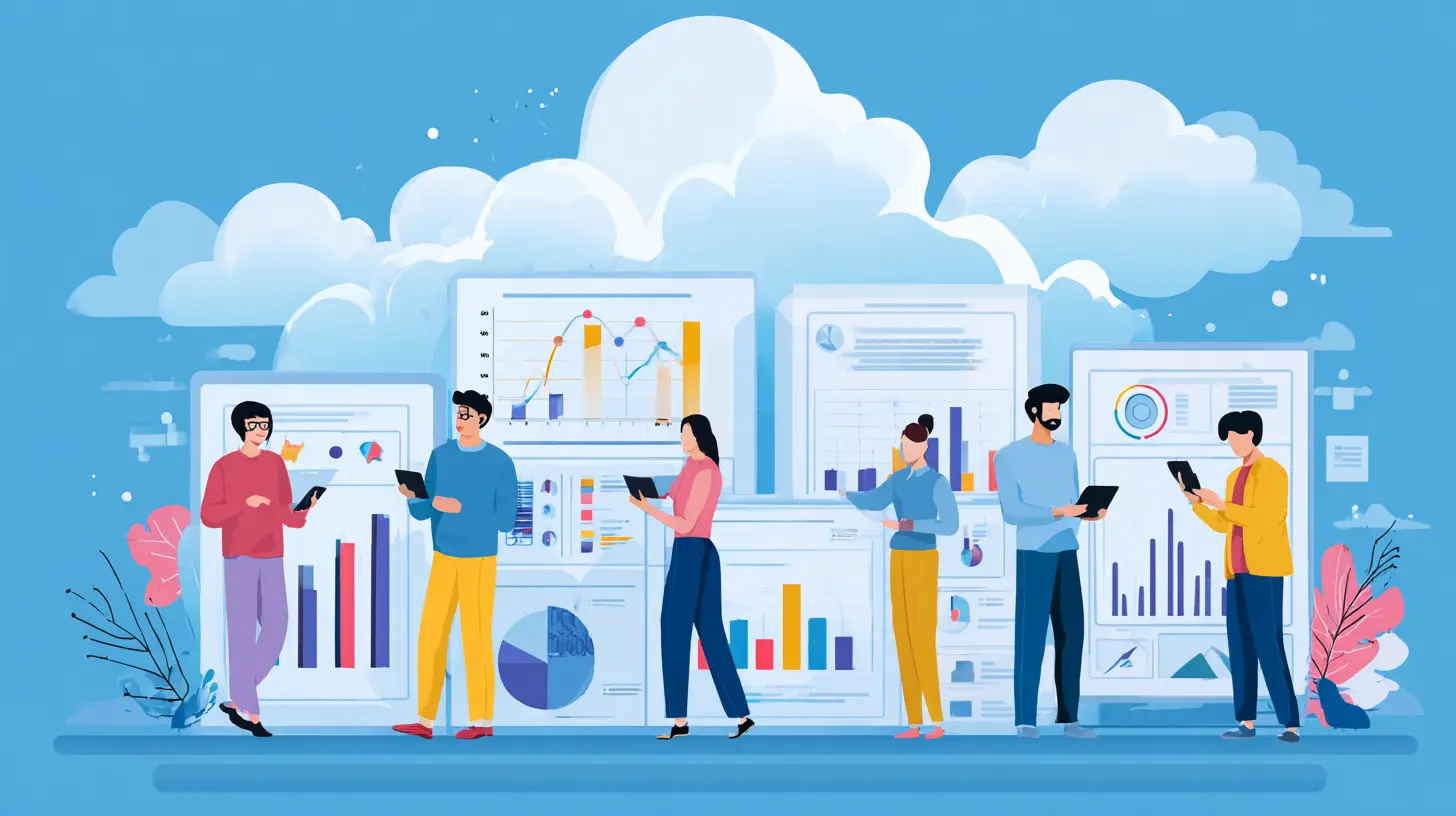
The Inevitable Ascent: Why SaaS Has the Momentum
First, let’s understand why this isn’t just a trend, but a tectonic shift. Think of traditional enterprise software (like SAP ERP, Oracle databases, or legacy CRM systems installed on your own servers) as buying, building, and maintaining your own power plant. It’s a massive capital expenditure (CapEx), it’s your responsibility to keep it running 24/7, and upgrading it is a years-long, multimillion-dollar construction project.SaaS, on the other hand, is like plugging into a sophisticated, renewable energy grid. You pay a subscription (Operational Expenditure, or OpEx) for the power you use. Someone else worries about the infrastructure, security, and upgrades. You just get reliable electricity that gets better over time, without you lifting a wrench.
The Irresistible Allure of Agility and Cost
For businesses gasping for air in today’s hyper-competitive market, this model is a lifeline. The lower upfront cost is just the entry ticket. The real magic is in the agility. Need to onboard a new team in Asia tomorrow? With SaaS, it’s a few clicks. Your developers need the latest tools to build a new feature? They can provision them in minutes, not months.This agility translates directly into speed and innovation. While a company running on-premise software is still assembling a committee to approve an upgrade, its SaaS-powered competitor has already tested, deployed, and iterated on a new feature that captures market share. It’s the difference between turning a cargo ship and a jet ski.
The User Experience Revolution
But let’s not forget the human in the loop—the actual employee. Traditional software was often built for the IT department or the CFO, with the end-user experience as a distant afterthought. SaaS flipped this script. Born in the consumer web era, SaaS applications compete fiercely on usability. They have to be intuitive, pleasant, and even delightful to use, or they’ll be abandoned. This has driven a user-experience renaissance inside companies, boosting adoption and actual productivity, rather than just forcing compliance.
The Immovable Objects: Where Tradition Holds Its Ground
So, with all these advantages, is it a done deal? Will 2027 dawn with every server room repurposed into a ping-pong lounge? Not quite. Traditional enterprise software is like an ancient oak tree—deeply rooted, incredibly strong in its core purpose, and not easily toppled.The Deep Integration Quandary
Large enterprises, especially in sectors like manufacturing, finance, and utilities, aren’t running on one or two applications. They’re operating complex, interdependent ecosystems of software that have been woven together over decades. These systems talk to each other in bespoke, deeply integrated ways. Replacing the core—like an ERP system that manages global supply chains, financials, and manufacturing—isn’t a “rip and replace” project. It’s a heart transplant on a marathon runner mid-race. The risk, cost, and disruption are often perceived as existential.Data Sovereignty and Security Concerns
“But what about my data?” This is the refrain in boardrooms discussing a move to the cloud. For some industries and governments, data sovereignty laws mandate that certain information never leaves a geographic region or must reside on specific, audited hardware. While major SaaS providers offer sovereign cloud options, the comfort of having your most sensitive data physically within your four walls, behind your firewall, is a powerful psychological and sometimes regulatory barrier.Furthermore, highly specialized industries with unique, non-negotiable processes may find that off-the-shelf SaaS solutions don’t quite fit. They need the deep, customizability that traditional software can sometimes offer (even if it’s painful to implement).
2027: Replacement or Reimagining?
This brings us to our deadline: 2027. I believe framing this as a simple “replacement” is where we get the future wrong. The story of 2027 won’t be about SaaS replacing traditional software in a clean, binary switch. It will be about SaaS redefining the enterprise software landscape.The Hybrid Horizon: The Best of Both Worlds
The most likely scenario for large enterprises by 2027 is a sophisticated, hybrid model. Think of it as a symbiotic relationship, not a war.The core, transactional systems of record—the deeply entrenched ERP at the heart of complex operations—may remain on-premise or in a private cloud for the foreseeable future. But surrounding this core will be a vibrant, dynamic constellation of SaaS applications—systems of engagement and innovation. These SaaS tools will handle customer experience (CX), human resources (HR), collaboration, marketing automation, and data analytics.
They will connect to the traditional core via a web of APIs (Application Programming Interfaces), which act like universal translators and connectors. This creates a "composable enterprise," where businesses can plug in best-in-class SaaS solutions for specific functions without dismantling their foundational systems. The traditional software becomes the stable, reliable spine; the SaaS applications become the agile, intelligent limbs and senses.
The Rise of Industry-Specific SaaS
A key driver towards this future is the explosive growth of vertical SaaS. We’re no longer just talking about general CRM or email. We’re seeing SaaS solutions built from the ground up for specific industries: healthcare practice management, construction project tracking, legal case management, and restaurant supply chain logistics. These solutions speak the native language of the industry and address its unique compliance needs, making them far more compelling replacements for clunky, traditional vertical software.The AI Tipping Point
And then there’s the accelerant: Artificial Intelligence. SaaS is the perfect delivery vehicle for AI. A traditional on-premise AI module would be outdated the moment it’s installed. SaaS-based AI, however, learns and improves continuously across its entire user base. By 2027, AI won’t be a feature of SaaS; it will be its foundational layer—automating workflows, predicting outcomes, and personalizing interfaces in ways traditional software could never match. This intelligence gap will become the most compelling argument for migration.
The Verdict: A Landscape Transformed
So, back to our burning question: Can SaaS replace traditional enterprise software by 2027?The answer is nuanced. For small and medium-sized businesses, and for many front-office functions in large enterprises, the replacement is already largely complete and will be total by 2027. The cost, agility, and innovation benefits are just too overwhelming.
For the massive, complex cores of global enterprises, wholesale replacement by 2027 is unlikely. The roots are too deep. However, these traditional systems will no longer be the "center of the universe." They will become one component—a critical, but background, utility in a broader, SaaS-dominated architecture.
The power dynamic will have irrevocably shifted. The innovation, the budget allocation, and the user experience will all live in the SaaS layer. Traditional software will be judged on its ability to connect to and enable this new world, not on its own monolithic feature set.
In essence, by 2027, the question won't be, "Have we replaced our old software?" It will be, "How intelligently is our SaaS ecosystem leveraging our core data and processes to drive value?" The paradigm will have shifted from ownership and control to agility, intelligence, and outcomes. The traditional software fortress won't be demolished; it will be surrounded, integrated, and ultimately, redefined by the agile, ever-evolving city of SaaS that has grown up around it. The future isn't replacement—it's evolution.
all images in this post were generated using AI tools
Category:
Saas ToolsAuthor:

John Peterson
Discussion
rate this article
2 comments
Anika Wolf
Absolutely, SaaS will not just replace traditional enterprise software by 2027; it will redefine the landscape. The agility, scalability, and cost-effectiveness of SaaS solutions are unmatched. Companies clinging to outdated systems will be left behind, as innovation drives the future. Adapt or become obsolete!
April 29, 2026 at 12:04 PM
John Peterson
You're spot on. The shift to SaaS is not just about replacement; it's about transformation. Businesses need to embrace this change to stay competitive.
Elwynn Mahoney
Absolutely! By 2027, SaaS will be so popular that traditional software might just start offering subscription plans for their nostalgic charm. Who doesn’t love a retro download?
April 29, 2026 at 3:42 AM
John Peterson
That's an interesting take! Nostalgia could definitely play a role, but the shift to SaaS is likely to continue dominating the market.