The Evolution of SaaS from Tools to Ecosystems
18 July 2026
If you have been in the software industry for more than a decade, you have witnessed a quiet revolution. The first wave of Software as a Service was simple: take an on-premise application, put it in the cloud, and charge a monthly fee. That was the easy part. The hard part, and the transformation that most companies are still struggling with today, is moving from being a standalone tool to becoming a platform that connects, integrates, and amplifies the work of its users.
This shift is not just about adding more features. It is about rethinking the very nature of what a software company provides. A tool solves a specific problem. An ecosystem solves a class of problems by enabling other tools, other developers, and other businesses to build on top of it. Understanding this distinction is critical for anyone building, buying, or investing in SaaS today.
Why Tools Stop Being Enough
Early SaaS products succeeded by solving one pain point exceptionally well. Salesforce started as a sales force automation tool. Slack began as a messaging app. Shopify was a simple e-commerce store builder. Each of these products had a clear job to do, and they did it better than the clunky on-premise alternatives.But here is the catch: as businesses digitize more of their operations, they stop wanting point solutions. They want a connected experience. A sales team that uses Salesforce for CRM, HubSpot for marketing, and Mailchimp for email is already dealing with three separate logins, three different data models, and no guarantee that the data syncs correctly. The friction of moving data between tools becomes a hidden tax on productivity.
The moment a SaaS company realizes that its customers are spending more time integrating its tool with other tools than actually using its tool, the shift from tool to ecosystem becomes not just a growth opportunity but a survival necessity.

The Anatomy of a SaaS Ecosystem
An ecosystem is not just an API. Many companies slap an API on their product and call themselves a platform. That is a common mistake. A true ecosystem has three layers that work together.The Core Platform Layer
This is the foundation. It is the original tool that solved the core problem. In an ecosystem, this core becomes the hub. It must be stable, well-documented, and architected for extensibility from day one. The core platform should expose its data and logic in a way that third parties can safely interact with it without breaking the user experience.For example, Salesforce's core platform is not just CRM. It is the underlying object model, the security framework, and the metadata engine that allows any developer to create custom objects, fields, and workflows without touching the core code. That architectural decision, made early in their history, allowed Salesforce to become an ecosystem rather than just a sales tool.
The Integration Layer
This is where the ecosystem becomes valuable. The integration layer includes APIs, webhooks, event streams, and pre-built connectors. But the key insight is that this layer must be designed for two-way communication. Many SaaS products build integrations that pull data in but never push data out. That creates a data sinkhole. An ecosystem pushes data back out in formats that other systems can consume.The best integration layers also handle errors gracefully. If a third-party service goes down, the ecosystem should queue the data, retry intelligently, and notify the user without losing anything. This is harder than it sounds, and many companies get it wrong by simply exposing a REST endpoint and calling it done.
The Marketplace Layer
This is the visible manifestation of the ecosystem. A marketplace where third-party developers can list their extensions, apps, or integrations. But a marketplace is not just a directory. It needs to handle billing, versioning, reviews, and support escalation. It needs to give developers a path to monetization while giving users confidence that the apps they install are secure and maintained.Shopify's app store is a textbook example. It does not just list apps. It handles revenue sharing, provides development tools, offers sandbox environments, and even manages the upgrade path when the core platform changes. This turns Shopify from a store builder into the operating system for retail.
The Economic Shift: From Subscription to Network Effects
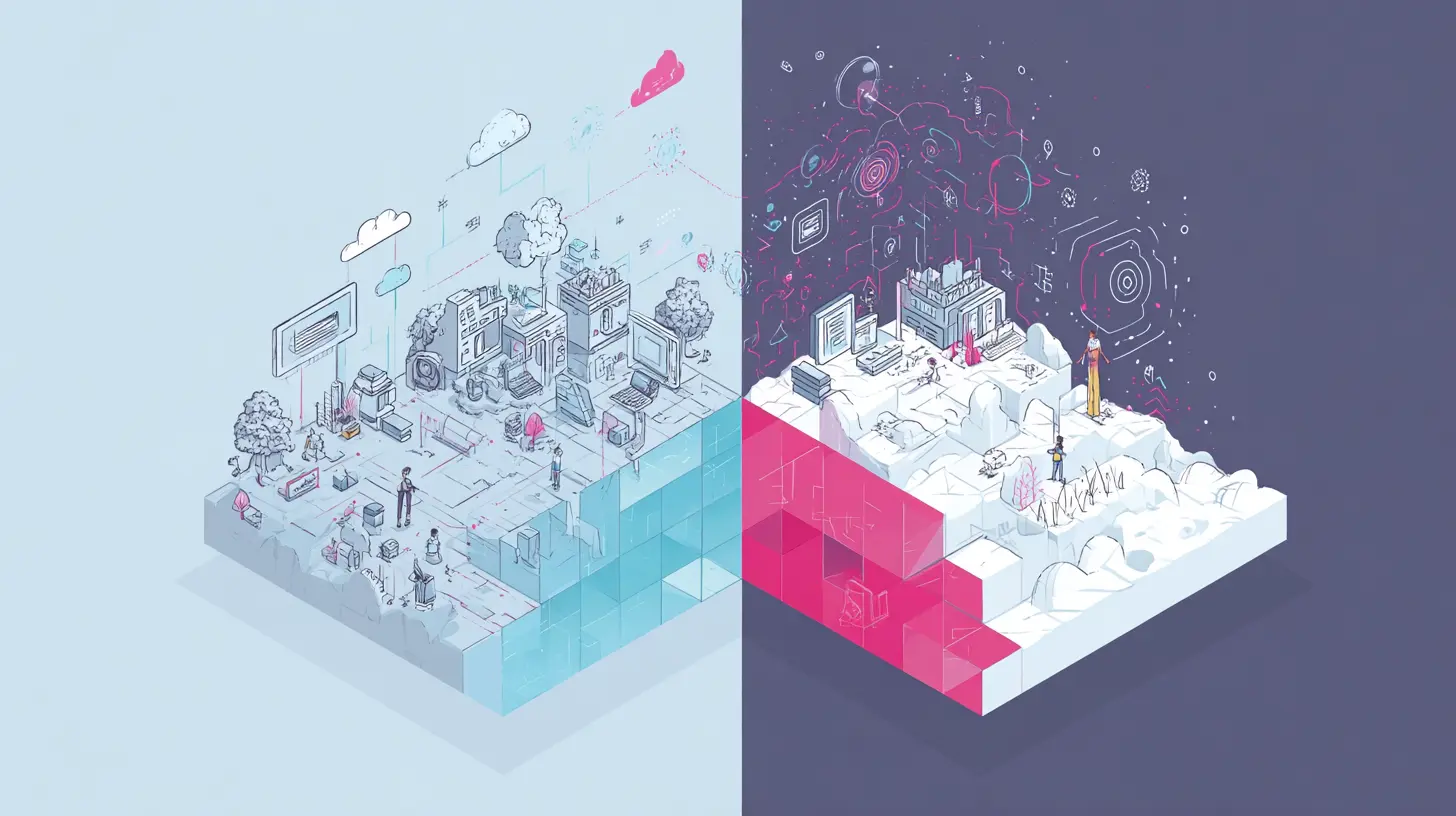
The most profound change when moving from tool to ecosystem is the business model. A tool sells subscriptions. An ecosystem captures value through network effects.Network effects in SaaS work differently than in social networks. In a social network, the value increases as more users join. In a SaaS ecosystem, the value increases as more complementary products are built on top of the platform. Each new app in the marketplace makes the core platform more valuable to existing users. Each new user of the core platform makes the marketplace more attractive to developers.
This creates a virtuous cycle. But it also creates a trap. If the core platform changes its API in a way that breaks existing apps, developers leave. If the platform starts competing with its own ecosystem by building native features that replicate popular third-party apps, trust erodes. Salesforce learned this lesson the hard way when they acquired and then killed several popular ecosystem apps, leaving developers wary.
The economic trade-off is real. A platform that captures too much value from its ecosystem will kill the ecosystem. A platform that captures too little value will not have the resources to maintain the infrastructure. The right balance is somewhere around giving developers a clear path to profitability while taking a reasonable cut for hosting, distribution, and support.
Real-World Examples of Ecosystem Evolution
Salesforce: The Original Platform Play
Salesforce started as a sales tool. But early on, they realized that no single company can build every feature every customer wants. So they created the Force.com platform, allowing developers to build custom apps on top of Salesforce's data and logic. Today, Salesforce's ecosystem generates more revenue for third-party developers than Salesforce makes from its own subscriptions. That is the power of a well-run ecosystem.The key lesson from Salesforce is that they invested heavily in developer experience. They created training programs, certification paths, and a dedicated developer relations team. They also made the platform extensible at the data model level, not just at the UI level. This meant developers could add fields, objects, and workflows that felt native to the platform.
Shopify: The Operating System for Commerce
Shopify's evolution from a shopping cart to a commerce ecosystem is instructive. They understood early that merchants need more than just a storefront. They need shipping, inventory management, marketing automation, accounting, and customer support. Rather than building all of this themselves, Shopify created a platform where specialist apps could thrive.The trade-off here is that Shopify has to balance the needs of mom-and-pop shops with enterprise merchants. The ecosystem approach works because both segments use the same core platform but install different apps. A small shop might use a simple inventory app, while a large merchant might use a complex ERP integration. The platform handles the differences through the ecosystem.
Slack: The Communication Hub That Became a Platform
Slack started as a team messaging tool. But they quickly realized that the real value was not in sending messages but in connecting the tools that teams already used. Their integration directory became the core of their value proposition. Today, Slack's ecosystem includes thousands of apps that bring data from other systems directly into the chat interface.The mistake Slack made early on was treating integrations as an afterthought. They had to rebuild their integration framework twice to support the scale and complexity that developers needed. This is a common pattern: companies underestimate the engineering investment required to maintain an ecosystem. It is not a one-time build. It is a continuous commitment.
Common Mistakes When Building a SaaS Ecosystem
Mistake 1: Building the Ecosystem Before the Core is Stable
This is the most common mistake I see. A startup with a promising product decides to open up an API and build a marketplace before the core product is rock solid. The result is a buggy platform that frustrates both users and developers. Developers cannot build reliable apps on top of an unstable foundation. Users blame the platform for the failures of third-party apps.The right approach is to make the core product excellent first. Achieve product-market fit. Build a loyal user base. Then, and only then, start thinking about an ecosystem. Salesforce waited years before launching their platform. Shopify waited until they had thousands of merchants. Patience pays off.
Mistake 2: Treating Developers as an Afterthought
Developers are the lifeblood of an ecosystem. If they have a bad experience building on your platform, they will not come back. Yet many companies treat their API documentation as a side project. They do not provide sandbox environments. They do not have a developer relations team. They do not respond to forum questions.The best ecosystems invest heavily in developer experience. They provide clear documentation, SDKs in multiple languages, sample code, and responsive support. They also listen to developer feedback and improve the platform based on that feedback. Treat developers as partners, not as a distribution channel.
Mistake 3: Over-Monetizing the Ecosystem
It is tempting to charge developers for every little thing. API calls, storage, bandwidth, listing fees, revenue share. But if you squeeze developers too hard, they will build for a competing platform or give up entirely. The most successful ecosystems keep the barrier to entry low and take a reasonable cut only when the developer succeeds.Shopify takes a revenue share only when an app generates sales. Salesforce charges a listing fee but gives developers a generous free tier. The goal is to make it easy for developers to start building and only start charging when they see value.
Mistake 4: Competing with Your Own Ecosystem
This is the fastest way to kill trust. When a platform builds a native feature that directly competes with a popular third-party app, developers feel betrayed. They invested time and money building on your platform, and now you are stealing their market.The smart approach is to either acquire the successful third-party app or leave the niche to the ecosystem. If you must build a competing feature, do it in a way that does not replicate the exact functionality of the existing app. Or better yet, partner with the developer to integrate their solution more deeply into the platform.
Best Practices for Building a SaaS Ecosystem
Start with a Clear Integration Strategy
Before you open your platform to third-party developers, define what integrations are critical for your users. Map out the most common workflows that cross system boundaries. Identify the data that needs to flow between your platform and other tools. Build those integrations yourself first, using the same API that external developers will use. This dogfooding process will reveal design flaws and missing features before they affect your ecosystem.Design for Backward Compatibility
One of the hardest parts of maintaining an ecosystem is managing change. Your platform will evolve. APIs will need to be updated. But every change you make risks breaking existing integrations. The solution is to version your APIs from day one and commit to supporting older versions for a reasonable period. Give developers advance notice of deprecations. Provide migration guides. And never, ever break an integration without warning.Invest in Security and Compliance
An ecosystem is only as strong as its weakest link. A single malicious or poorly written app can compromise the data of all your users. You need a review process for submitted apps. You need automated security scanning. You need clear guidelines about data handling and privacy. And you need a way to quickly remove apps that violate your policies.GDPR, CCPA, and other privacy regulations add another layer of complexity. If your platform handles personal data, you need to ensure that third-party apps also comply. This is not just a legal requirement. It is a trust requirement. Users will not build on a platform that leaks their data.
Build a Community, Not Just a Marketplace
An ecosystem is a social structure as much as a technical one. Developers need to connect with each other. They need to share best practices. They need to feel like they are part of something bigger than just an app store.Create forums, host hackathons, run developer conferences, and recognize outstanding contributions. The most successful ecosystems have a strong sense of community. Developers stay because they have relationships with other developers on the platform. They contribute because they feel ownership.
The Future: Ecosystems as Economic Moats
The endgame of the SaaS evolution is the creation of an economic moat. A tool can be replaced. A subscription can be canceled. But an ecosystem is sticky. The more apps a user has installed, the more workflows they have automated, the more data they have stored, the harder it is to switch to a competitor.This stickiness is not accidental. It is the result of deliberate architectural decisions, sustained investment in developer relations, and a long-term commitment to the platform. Companies that treat ecosystems as a side project will never achieve this moat. Companies that make ecosystems their core strategy will dominate their markets.
But there is a warning here. Ecosystems can become prisons. If a platform becomes too dominant, it can extract monopoly rents from its users and developers. We have seen this in social media, in app stores, and in enterprise software. The antidote is to keep the ecosystem open. Allow data portability. Make it easy for users to export their data. Do not lock them in through technical barriers. Lock them in through value.
Practical Advice for SaaS Leaders
If you are leading a SaaS company and considering the ecosystem path, here is my advice.First, audit your current product. Is it stable? Is it scalable? Do you have a clear API? If the answer to any of these is no, fix that before you do anything else.
Second, talk to your most advanced users. Ask them what tools they use alongside your product. Ask them what integrations they wish existed. This will give you a roadmap for your ecosystem.
Third, start small. Do not try to build a marketplace overnight. Pick one or two strategic integrations and build them yourself. Use that experience to refine your API and your developer documentation. Then open the platform to a small group of trusted developers. Learn from them. Iterate. Then scale.
Fourth, measure what matters. Do not just count the number of apps in your marketplace. Measure developer satisfaction, user adoption of third-party apps, and the revenue generated by the ecosystem. These are the metrics that tell you whether your ecosystem is healthy.
Fifth, be patient. Ecosystems take years to build. Salesforce's ecosystem did not become dominant overnight. Shopify's app store did not have thousands of apps on day one. The companies that succeed are the ones that commit for the long haul.
Conclusion
The evolution from tool to ecosystem is not a feature. It is a fundamental shift in how a software company thinks about its product, its users, and its market. A tool solves a problem. An ecosystem solves a business. A tool has users. An ecosystem has partners. A tool has a subscription model. An ecosystem has network effects.This shift is hard. It requires technical investment, organizational change, and a willingness to share control. But for companies that get it right, the rewards are enormous. They become the platforms that define their industries. They become indispensable.
The question is not whether your SaaS product will evolve into an ecosystem. The question is whether you will lead that evolution or be left behind by competitors who do.
all images in this post were generated using AI tools
Category:
Saas ToolsAuthor:

John Peterson
Discussion
rate this article
1 comments
Marni Lane
This article offers valuable insights into the transformation of SaaS. The shift from standalone tools to integrated ecosystems highlights how businesses can leverage interconnected solutions for greater efficiency and innovation. It's fascinating to see how these changes are shaping the future of technology and collaboration. Great read!
July 19, 2026 at 3:10 AM
John Peterson
Thank you for your insightful comment! I'm glad you found the article valuable and engaging. The evolution of SaaS truly is fascinating.